Electricity on the Tracks: The Invisible Danger
The third rail and overhead power lines carry deadly voltage. Here's what every family needs to know.
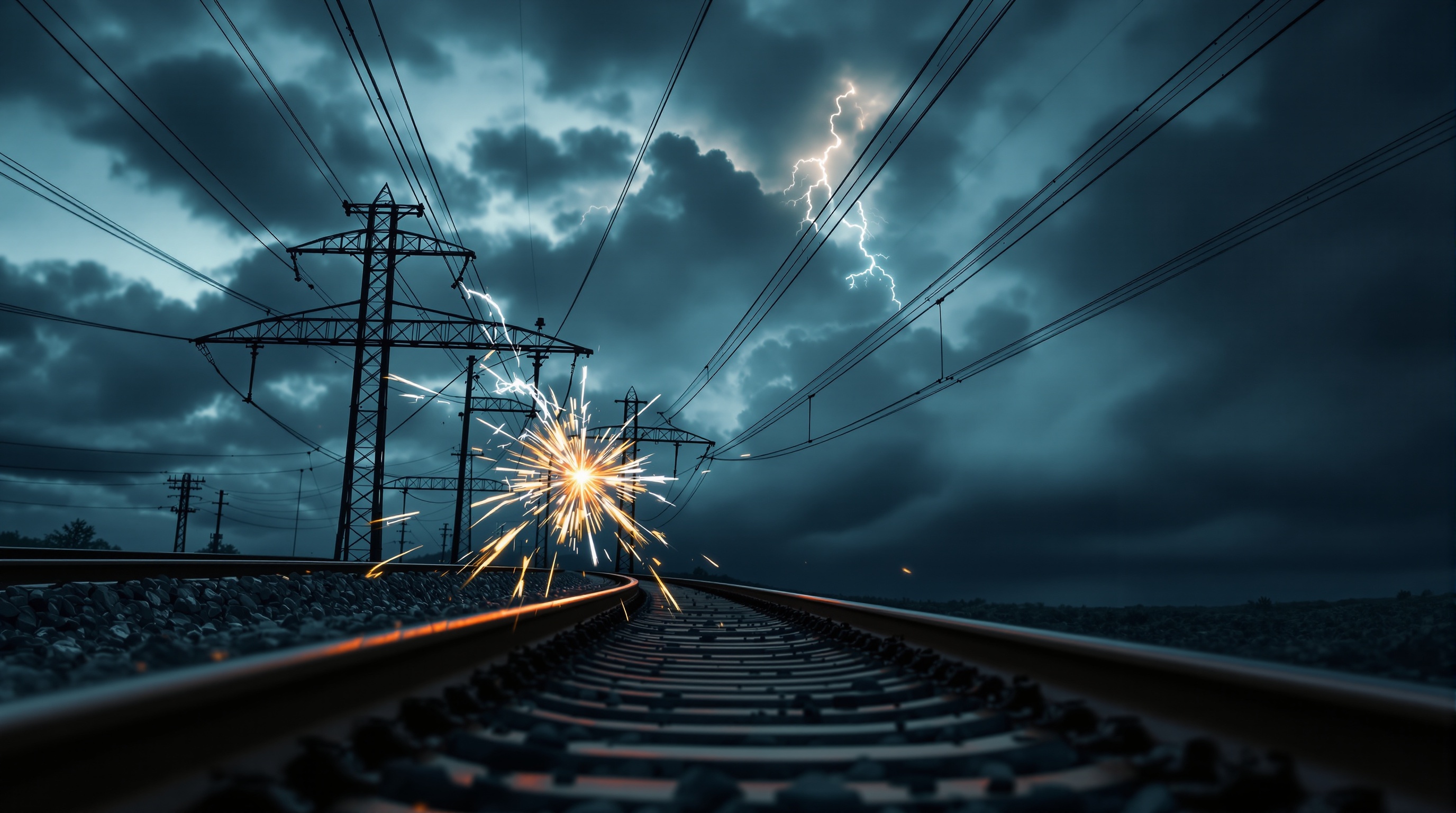
For kids: Trains need electricity to run, just like your phone needs a charger. But this electricity is WAY more powerful — and touching any part of the track area can be fatal.
When most people think about train tracks, they think about the trains themselves — the massive engines, the wheels, the speed. But there is a danger that is completely invisible, completely silent, and just as deadly as any locomotive: electricity.
Railway electrification systems power millions of trains worldwide. They are marvels of engineering that allow trains to move faster, cleaner, and more efficiently than ever before. But they also create an environment where a single wrong step can end a life.
Where the Electricity Lives
There are two main ways trains receive electrical power, and both present serious risks to anyone who gets too close:
Power Delivery Systems
The Third Rail
An extra rail running alongside the tracks that carries high-voltage direct current. It sits at ground level, often just inches from the running rails, making it deceptively easy to touch or step on.
Voltage: 600V to 750V DC
Overhead Catenary Lines
Wires suspended above the tracks that deliver power to trains through a pantograph on the train's roof. These lines carry alternating current at extremely high voltages.
Voltage: 25,000V AC
To put that in perspective, the overhead lines carry roughly the same voltage as a high-tension power line on a utility pole — the kind that can arc electricity through the air without you even touching it.
See the Power in Action
This video demonstrates the incredible force of railway electricity and why even standing near energized tracks can be life-threatening:
A Mother's Perspective
Hear from a mom who shares the realities of railway electricity dangers and why awareness matters for every family:
From the Employee on Site
Hear directly from the railroad employee who was on site that day — an eye-witness account of what railway electricity danger really looks like from someone who sees it up close:
Why It Is More Dangerous Than It Looks
Electricity on railway tracks is not like the wiring in your home. It is designed to deliver massive amounts of power over long distances, and it does not give you a warning zap first. Here is what makes it uniquely dangerous:
Hidden Dangers of Railway Electricity
Electrical Arcing
High-voltage current can jump through the air. You do not need to touch a wire to be electrocuted — just getting too close can be fatal.
Conductive Surfaces
Wet ground, metal fences, railings, and even puddles near tracks can conduct electricity back to your body.
No Warning Signs
Unlike a snarling dog or a speeding car, electricity makes no sound. You will not hear it coming.
Instant Cardiac Arrest
Contact with rail power can stop a human heart instantly. Survival depends entirely on immediate medical intervention.
The Mistakes Kids and Teens Make
Curiosity and risk-taking are normal parts of growing up. But when it comes to electrified tracks, the margin for error is zero. Here are the situations that lead to tragedy:
Walking on or Near Tracks
Many kids use tracks as shortcuts. On electrified lines, stepping on or even near the third rail can be instantly fatal. The safest distance is as far away as possible.
Retrieving Lost Items
A dropped phone, a kicked ball, a lost toy — kids go after them. But on electrified tracks, bending down to grab something puts your body within lethal range.
Photography and Social Media Dares
Photo shoots on tracks are a growing trend. Kids climb signal gantries, stand under overhead wires, or pose on the third rail for dramatic shots — with no understanding of the voltage inches away.
Assuming Rain or Weather Makes It Safer
Actually, the opposite is true. Wet conditions make everything more conductive. Standing in a puddle near a third rail is one of the most dangerous scenarios possible.
For families: A simple rule to teach kids — "If you can see tracks, you are too close." Teach them to cross only at designated crossings and never to retrieve anything from track areas, no matter what was lost.
What to Do If Someone Is in Danger
If you see someone on or near electrified tracks, do not try to pull them off yourself. The electricity can pass through their body into yours. Instead:
Call Emergency Services Immediately
Dial 911 (or your local emergency number). Tell them someone is on electrified railway tracks. They will contact the rail operator to shut off power.
Stay at a Safe Distance
Do not approach. Shout warnings from at least 30 feet away. Electricity can arc and the ground itself may be energized.
Warn Others Away
Prevent bystanders from approaching. Many electrocutions happen because good Samaritans do not realize the danger extends beyond the person in contact.
Wait for Professionals
Only trained emergency responders with proper equipment should approach. They know how to safely de-energize the area.
Teaching Safety Without Fear
Kids should understand that electricity on tracks is dangerous, but they should not live in terror of trains. The goal is respectful awareness — knowing why the rules exist and choosing to follow them because they make sense.
Here is how to have that conversation without creating anxiety:
Use Facts, Not Fear
Explain how electricity works and why high voltage is different from a household outlet. Knowledge reduces mystery — and mystery drives curiosity.
Show Safe Boundaries
When near tracks, physically point out where the safe line is. Make it concrete and visual, not abstract.
Invite Questions
Let kids ask "what if" questions. "What if my ball goes over the fence?" "What if I only touch the regular rail?" Answer honestly without judgment.
Repeat the Core Rule
"Never go near tracks." Make it a family mantra. Repetition turns a conversation into a habit.
What We Teach at The Cody Ron Foundation
We believe that understanding leads to better choices. Our programs teach kids not just to avoid tracks, but to understand why — including the invisible dangers like electricity that they cannot see, hear, or feel until it is too late.
Real Science, Real Safety
We explain voltage, conductivity, and arcing in age-appropriate ways kids actually understand.
Honest Discussions
We answer the hard questions kids have about danger without sugarcoating or scaring them.
Empowered Decision Making
Kids who understand the "why" make safer choices even when no adult is watching.
Talk About It
Many parents talk to kids about looking both ways before crossing the street or not talking to strangers. Railway electricity deserves the same level of explicit conversation — because unlike cars or strangers, this danger is invisible.
Ask your child what they know about electricity on tracks. You might be surprised by what they have heard, what they believe, and what they have seen friends do. Listen first. Then fill in the gaps with facts.
The conversation you have today could be the one that saves your child's life. Electricity on tracks is not a distant risk — it is present on tens of thousands of miles of rail worldwide. Share this article and start the conversation.
Share this article