Trespassing on Railway Property: Why Trains Cannot Stop
Any body part on the railway is dangerous — not because of what you are doing, but because the train cannot stop.
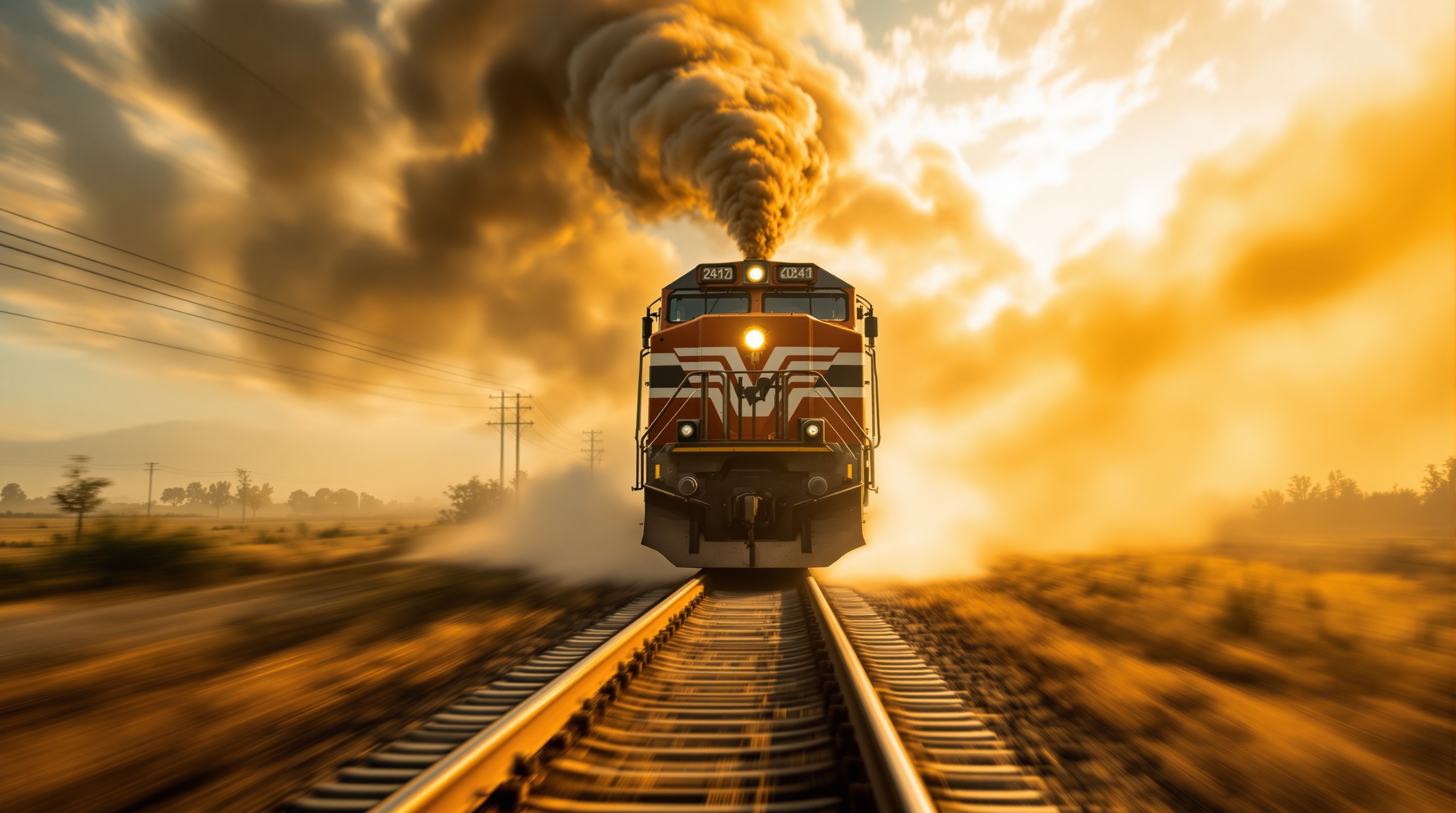
For kids: It does not matter if you are just putting one foot on the track, throwing something, or trying to take a quick photo. A train needs the length of more than 20 football fields to stop — and it might already be too close to see.
Railway property is not a park. It is not a shortcut. It is not a photo backdrop. And it is not a place where you can hear danger coming in time to get out of the way.
Every year, hundreds of people are killed or seriously injured because they were on or near train tracks when they should not have been. The most heartbreaking part? Most of them never thought they were in danger. They were just walking. Just exploring. Just taking a picture. Just being kids.
But here is the truth that every child, teen, and parent needs to understand: any body part on the railway is dangerous. Not because tracks are evil. Not because trains are mean. But because trains are massive machines designed to keep moving — and stopping one is not as simple as hitting the brakes in a car.
See Why Trains Cannot Stop
This video demonstrates the brutal physics of train braking distances and why even a fully alert engineer cannot save someone who is on the tracks:
Another Powerful Warning
This video shares another critical perspective on why railway trespassing is never worth the risk:
The Physics of a Train That Cannot Stop
Most people vastly underestimate how long it takes a train to stop. A typical freight train weighing 12,000 tons and traveling at 55 miles per hour needs more than a mile to come to a complete stop after the emergency brakes are applied. That is more than 18 football fields. By the time an engineer sees someone on the tracks, it is almost always too late.
Stopping Distance Facts
Freight Train at 55 MPH
A fully loaded freight train needs over a mile to stop once the brakes are applied. The average human reaction time alone covers hundreds of feet before braking even begins.
Stopping Distance: 1+ mile
Passenger Train at 80 MPH
Even lighter passenger trains traveling at highway speeds need thousands of feet to stop. An engineer who spots a person on the track has mere seconds to react — and often no time at all.
Stopping Distance: 4,000+ feet
Think about that. A mile. If you are standing on a track and a train is a mile away, the engineer may already be applying emergency brakes — and the train will still hit you. That is not negligence. That is physics. Trains are hundreds of times heavier than cars and have steel wheels on steel rails with very little friction. They glide. And they glide for a very, very long time.
What Kids and Teens Do Not Realize
Railway trespassing is not just about walking on tracks. It is any unauthorized presence on railway property — and it is the leading cause of rail-related deaths in the United States. Here are the situations that put young lives at risk:
Using Tracks as Shortcuts
Kids walk along tracks to get somewhere faster. But trains can come from either direction, on any track, at any time — scheduled or unscheduled. There is no safe way to walk on or beside tracks.
Photo and Video Shoots
Social media has made train tracks a popular backdrop for photos and videos. But turning your back to pose for a shot means you cannot see a train approaching — and the train cannot stop for you.
Exploring Rail Yards and Trestles
Abandoned-looking rail yards and old trestle bridges attract curious kids. But these areas are active. Trains move silently through yards, and trestles have no escape routes — you are trapped between rails over a drop.
Wearing Headphones Near Tracks
Modern trains are quieter than ever. Walking near tracks with headphones on removes the one warning you might have had. And by the time you see the train, there is no time to react.
The Myths Kids Believe
Dangerous beliefs spread quickly among kids and teens. Here are the myths that need to be corrected before they lead to tragedy:
Dangerous Myths vs. The Truth
Myth: "I will hear it coming."
Modern trains, especially from behind, can be nearly silent. Wind, headphones, or distance can mask the sound entirely.
Myth: "The engineer will see me."
Trains have huge blind spots. A person lying down, crouching, or even standing close to the track may be invisible until it is too late to stop.
Myth: "I can get out of the way in time."
A train traveling at 55 MPH covers 80 feet per second. A train at 80 MPH covers nearly 120 feet per second. Human reaction time alone is about 1.5 seconds. The math does not work in your favor.
Myth: "Only the main tracks are dangerous."
Siding tracks, yard tracks, and spurs are all active. Trains can move in any direction on any track at any time of day or night.
For families: The only safe place near tracks is on the other side of a fence, at a designated crossing, or far away entirely. Teach your kids that tracks are never a playground, never a shortcut, and never a photo spot — no matter how quiet they look.
What to Do If You See Someone on the Tracks
If you see a person, animal, or object on railway tracks, your instinct may be to run toward them. Do not. Your life is at risk too. Instead, take these steps immediately:
Call Emergency Services Immediately
Dial 911. Tell them someone is trespassing on railway tracks. Provide the nearest crossing or milepost if you know it. They will contact the rail operator.
Warn From a Safe Distance
Shout from at least 30 feet away. Do not approach the tracks yourself. Trains can approach silently and quickly, putting you in danger too.
Look for an Emergency Contact Number
Many crossings have a blue sign with a phone number to report emergencies directly to the railroad. Use it if you can do so safely.
Stay on the Scene if Safe
If you are at a safe distance, stay to direct emergency responders. But never put yourself on or near the tracks to help.
Teaching Safety Without Shame
Kids who explore tracks are usually not rebellious — they are curious, adventurous, or simply uninformed about the real danger. The goal is not to scare them into paralysis. It is to give them the facts so they choose safety because it makes sense.
Here is how to have a conversation that builds awareness without creating fear:
Show the Math
Help them visualize a mile. Walk it together. Then explain that a train at full speed needs that entire distance to stop. It makes the abstract real.
Talk About Blind Spots
Kids assume if they can see the train, the engineer can see them. Explain how train cabs sit high above the rails and how curves and hills block the view.
Explain the Silence
Many kids believe trains are loud. Show them videos of modern trains approaching quietly. Remove the false sense of security.
Set Clear Boundaries
"Never on the tracks. Never on rail bridges. Never in rail yards." Simple rules, no exceptions, no ambiguity.
What We Teach at The Cody Ron Foundation
Our mission is rooted in the reality of railroad life. We do not shy away from the hard truths because we know what happens when kids do not understand them. Our programs teach:
Real Physics, Real Respect
We teach kids exactly why trains cannot stop — weight, speed, friction — so they respect the track, not just fear it.
Peer Conversations
Kids listen to kids. We create safe spaces where older teens share what they wish they had known about track safety.
Love That Protects
We frame safety as an act of love — for yourself, your family, and the community that wants you home alive.
Start the Conversation
Ask your child directly: "Have you ever walked on or near train tracks?" Listen without judgment. Many kids have — and they did not realize the danger until someone told them. Your calm, fact-based conversation might be the first time they hear the truth.
Show them the video above. Walk a mile together and talk about what it means that a train needs that entire distance to stop. Make it real. Make it memorable. Make it stick.
Built by the railroad.
Broken by the system.
Rebuilt by love.
— The Cody Ron Foundation
Share this. If you know a parent, a teacher, or a teen who thinks tracks are just metal rails — pass this along. The conversation you spark today could save a life tomorrow. Any body part on the railway is dangerous. The train cannot stop. But you can choose to stay away.
Share this article